Legal Insights
What to Do After a Car Accident: A Step-by-Step Legal Guide
By Advocate Dr. Vishnu Sharma • 24/9/2026
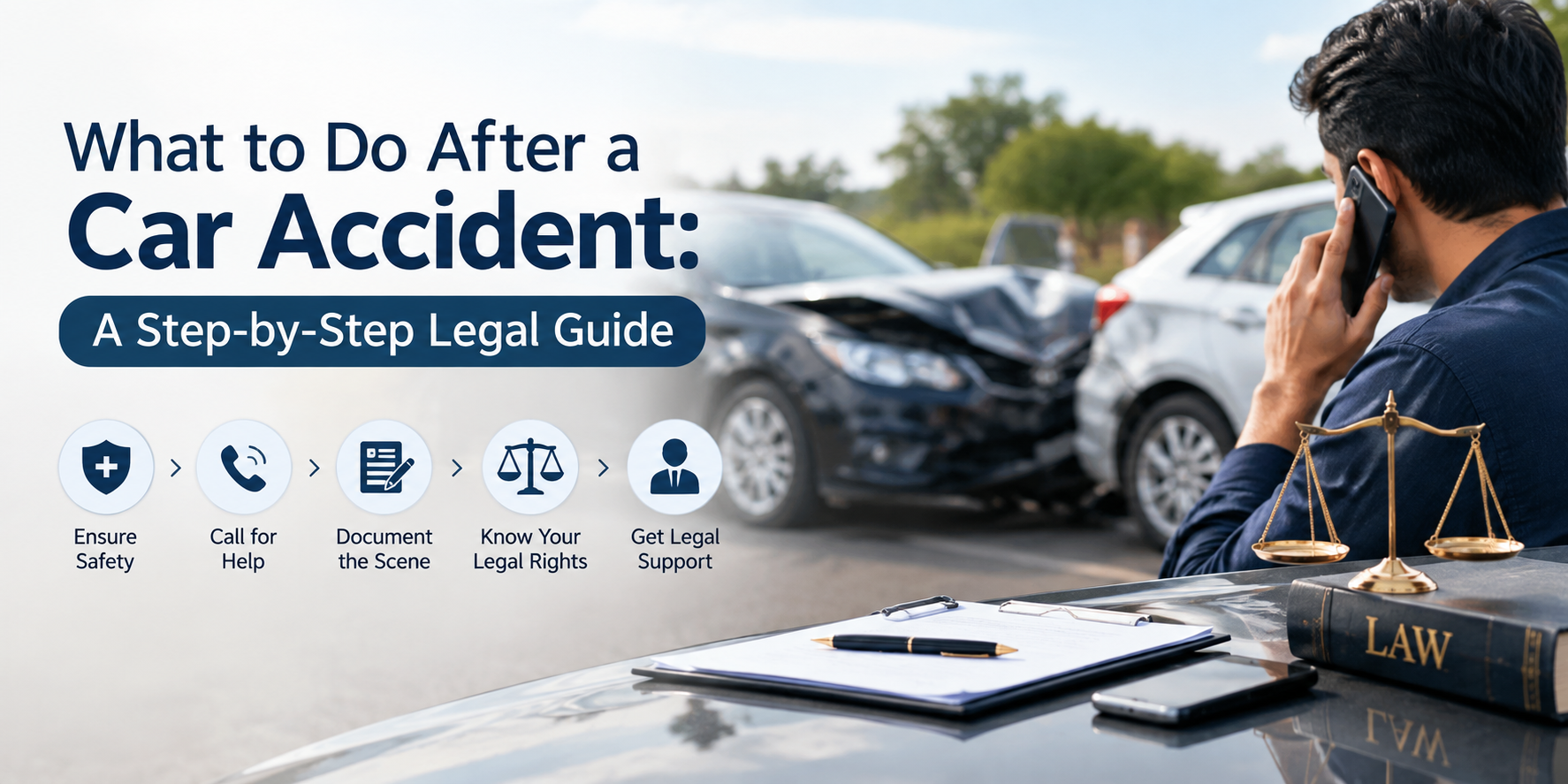
What to do after a car accident? Learn the essential legal steps, insurance process, evidence collection, compensation claims, and when to consult a lawyer in India.
What to Do After a Car Accident: A Step-by-Step Legal Guide
Car accidents happen in seconds, but the decisions you make right after can affect you for months — sometimes years. Whether it's a minor fender bender or something more serious, staying calm and following the right steps can protect your health, your rights, and your wallet. Here's a practical, no-nonsense guide to what you should actually do.
1. Check for Injuries First
Before anything else — before you even think about damage to the car — check yourself and everyone else involved for injuries. Adrenaline can mask pain, so even if you feel "fine," don't assume you're unhurt. If anyone is injured, call emergency services immediately. Don't try to move a badly injured person unless there's an immediate danger, like a fire or oncoming traffic.
2. Move to Safety (If You Can)
If the vehicles are drivable and no one is seriously hurt, move them to the side of the road or a nearby parking area. Staying in the middle of traffic increases the risk of a second collision. Turn on your hazard lights and, if you have them, set up warning triangles or flares behind the vehicles.
3. Call the Police
Even for a minor accident, it's smart to get the police involved. A police report is an official record of what happened, and it can be crucial later if there's a dispute about fault or if you need to file an insurance claim. Some places actually require you to report accidents above a certain damage threshold, so check your local laws.
When the officer arrives, stick to the facts. Describe what happened without guessing or admitting fault — even something as simple as "I'm sorry" can be interpreted as an admission of liability in some situations. Just explain what you saw and did.
4. Exchange Information
Get the following from every other driver involved:
- Full name and contact number
- Driver's license number
- License plate number
- Insurance company and policy number
- Vehicle make, model, and color
If there are witnesses, ask for their contact details too — their account could matter if the story gets disputed later.
5. Document Everything
Your phone is your best friend here. Take photos and videos of:
- All vehicles involved, from multiple angles
- License plates
- Visible injuries
- Skid marks, debris, or road conditions
- Traffic signals or signs nearby
- The overall accident scene, including surrounding landmarks
This isn't about being paranoid — it's about having evidence that speaks for itself if memories get fuzzy or accounts don't match up later.
6. Avoid Discussing Fault at the Scene
It's tempting to talk things through with the other driver right there on the road, but resist the urge to speculate about who caused what. Fault is often determined later, based on evidence, police reports, and sometimes witness statements. Anything you say at the scene could be used against you, so keep the conversation factual and brief.
7. See a Doctor — Even If You Feel Okay
Some injuries, like whiplash or internal bruising, don't show symptoms right away. Getting checked out within 24-48 hours creates a medical record that links your injury to the accident, which matters a lot if you end up needing compensation. Waiting too long to see a doctor can actually hurt your claim, because it gives insurance companies room to argue the injury wasn't accident-related.
8. Notify Your Insurance Company
Report the accident to your insurer as soon as possible — most policies require prompt notification. Stick to the facts when describing what happened, and avoid over-explaining or speculating. If the insurance adjuster asks for a recorded statement, it's okay to keep your answers short and factual.
9. Keep a File of Everything
Start a folder — physical or digital — with copies of the police report, medical records, repair estimates, insurance correspondence, and any receipts related to the accident (towing, rental car, medications). This makes life so much easier if you need to file a claim or if things escalate to a legal dispute.
10. Consider Talking to a Lawyer
If the accident involved significant injuries, unclear fault, or a difficult insurance company, it's worth consulting a personal injury lawyer — many offer free initial consultations. They can help you understand what your claim is actually worth and make sure you're not settling for less than you deserve.
Final Thoughts
Nobody plans for a car accident, but knowing these steps ahead of time can make a chaotic moment feel a little more manageable. Stay calm, prioritize safety, document thoroughly, and don't rush into decisions about fault or settlements. A little patience and preparation now can save you a lot of stress later.