Legal Insights
Adoption Process and Legal Requirements
By Advocate Dr. Vishnu Sharma • 24/9/2026
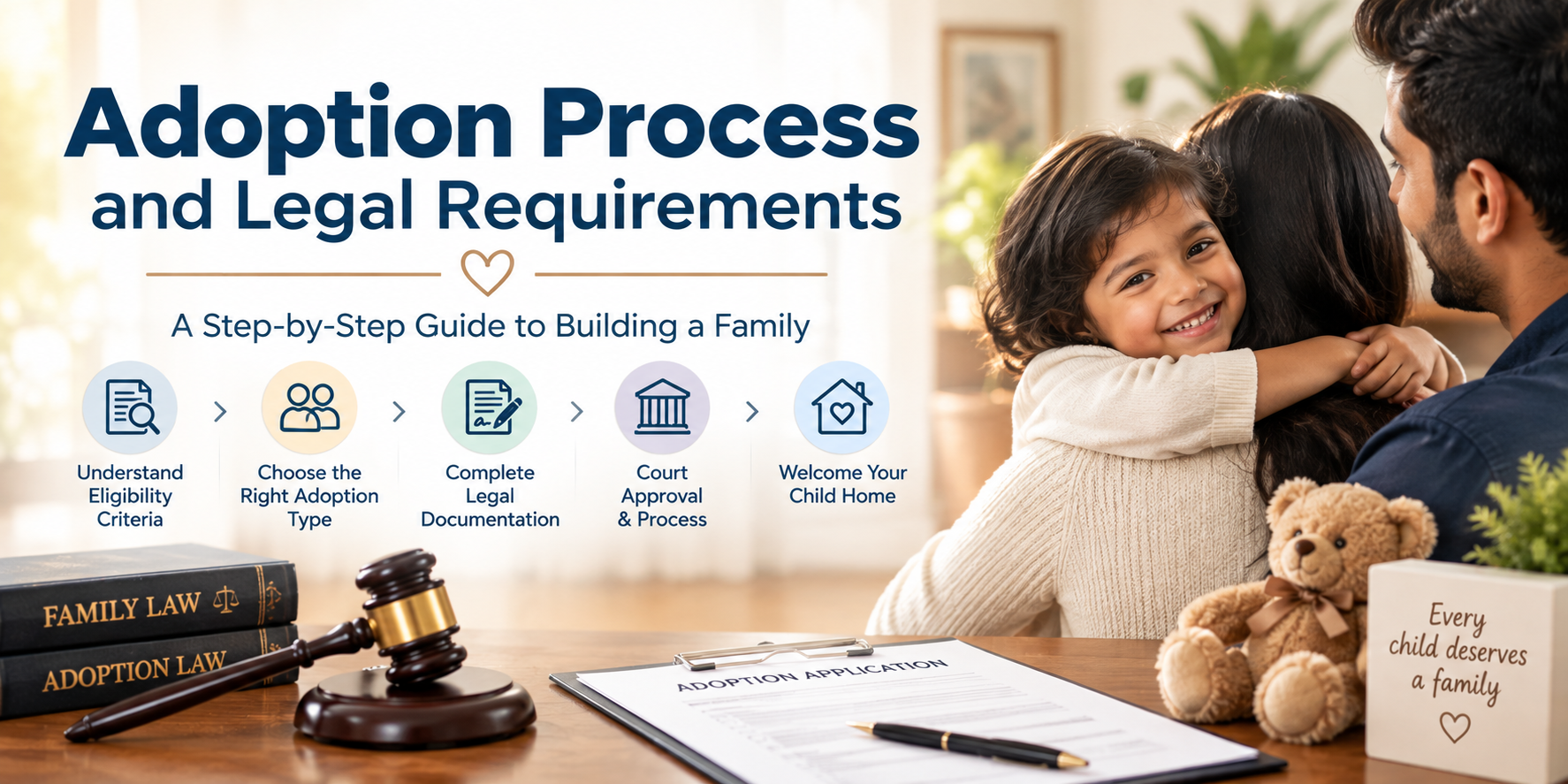
Learn about the adoption process in India, including eligibility, legal requirements, documentation, registration, and key steps for prospective adoptive parents.
Adoption Process and Legal Requirements
Adoption is one of the most beautiful yet legally intricate journeys a family can undertake. Whether you're a couple longing to grow your family or an individual wanting to give a child a loving home, understanding the legal process is essential — not just for compliance, but to make sure the child's welfare stays at the center of everything. Here's a clear breakdown of how adoption works and what the law requires.
What Is Legal Adoption?
Legal adoption is the process by which a child becomes the lawful son or daughter of adoptive parents, with all the rights, responsibilities, and relationships that come with biological parenthood. Once finalized, the adoptive parents assume full legal responsibility for the child, and in most cases, the child's legal ties to their biological parents are permanently severed.
Who Can Adopt?
Eligibility requirements vary by country and jurisdiction, but generally, prospective adoptive parents must meet certain criteria:
- Age requirements – Most jurisdictions require adoptive parents to be a minimum age, often 25 years or older, with an age gap requirement between the parent and child.
- Marital status – Many countries allow single individuals to adopt, while others have specific provisions for married couples.
- Financial stability – Prospective parents typically need to demonstrate the ability to provide for the child's basic needs.
- Health and background checks – A medical fitness certificate and criminal background verification are usually mandatory.
- Home study approval – A social worker or agency evaluates the prospective parents' home environment, lifestyle, and readiness to parent.
Types of Adoption
1. Domestic Adoption
This involves adopting a child from within your own country, often through a recognized adoption agency or government body.
2. Inter-Country Adoption
This is when parents adopt a child from a different country. It involves additional legal steps, including compliance with international treaties like the Hague Adoption Convention, which sets safeguards to prevent child trafficking and ensure ethical adoption practices.
3. Relative or Kinship Adoption
This occurs when a family member — such as a grandparent, aunt, or uncle — legally adopts a child, often in situations where biological parents are unable to care for them.
4. Step-Parent Adoption
This happens when a step-parent legally adopts their spouse's child, granting them full parental rights and responsibilities.
Step-by-Step Adoption Process
1. Research and Choose an Agency
Start by identifying a licensed, government-approved adoption agency. Working through a legitimate agency ensures the process follows legal protocols and protects everyone involved, especially the child.
2. Register and Submit Documentation
Prospective parents typically need to submit documents such as identity proof, marriage certificates (if applicable), income proof, medical certificates, and photographs.
3. Home Study Evaluation
A certified social worker conducts a home study, which includes interviews, home visits, and an assessment of the family's readiness and suitability to adopt.
4. Matching Process
Once approved, prospective parents are matched with a child based on various factors, including the child's needs and the family's preferences and capabilities.
5. Pre-Adoption Foster Care
In many jurisdictions, there's a foster period before the adoption is finalized, allowing the child and family to bond and adjust to one another.
6. Court Approval and Legal Finalization
The final step involves filing a petition in court. A judge reviews the case, ensures all legal requirements have been met, and issues an adoption order, making the placement legally permanent.
7. Post-Adoption Follow-Up
Some agencies or courts require periodic follow-up visits after the adoption to ensure the child is adjusting well and the placement remains stable.
Legal Documents Typically Required
- Birth certificate of the child
- Adoption petition filed in court
- Home study report
- Consent from biological parents (if applicable and traceable)
- Medical records of the child
- Court order finalizing the adoption
Rights of the Adopted Child
Once adoption is finalized, the child typically gains:
- Full legal rights as a biological child, including inheritance rights
- The adoptive parents' surname (if desired)
- All the same legal protections and entitlements as any other child in the family
Common Challenges in the Adoption Process
- Lengthy waiting periods, especially for inter-country adoptions
- Complex documentation requirements that can feel overwhelming without legal guidance
- Emotional challenges as families navigate uncertainty during the matching and waiting process
- Legal disputes, particularly in cases involving biological parents contesting the adoption
Why Legal Guidance Matters
Adoption laws can be complicated and vary significantly by jurisdiction. Consulting a family law attorney who specializes in adoption can help prevent procedural delays, ensure all paperwork is accurate, and protect the interests of both the child and the adoptive family throughout the process.
Final Thoughts
Adoption is a life-changing decision — for the child and for the family welcoming them in. While the legal process might seem daunting at first, it exists to protect everyone involved, especially the most vulnerable party: the child. With the right guidance, patience, and support, adoption can be one of the most rewarding legal journeys a family ever takes.