Legal Insights
What Is a Vakala Nama and Why Does It Matter?
By Advocate Dr. Vishnu Sharma • 24/9/2026
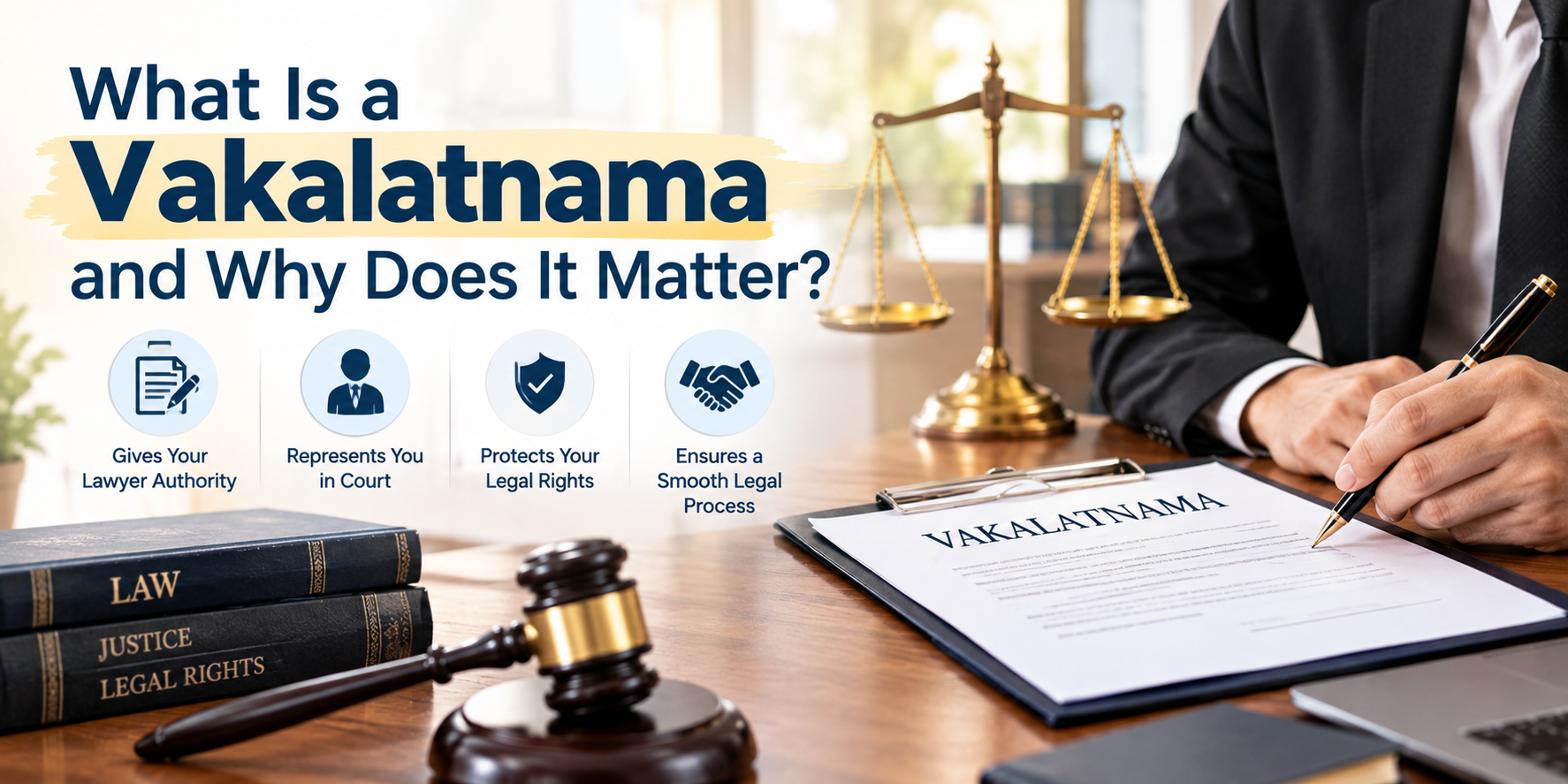
Understand what a Vakalatnama is, why it matters in Indian courts, what it authorizes a lawyer to do, and how it works in legal proceedings.
What Is a Vakalatnama and Why Does It Matter?
If you've ever been part of a legal case in India — even as a witness or a party seeking help — you've probably come across the term "Vakalatnama." It sounds technical, but it's actually one of the simplest yet most important documents in the Indian legal system. Without it, your lawyer can't even step into court on your behalf. Let's break down what it really means and why it matters so much.
What Exactly Is a Vakalatnama?
A Vakalatnama is a legal document that authorizes an advocate (lawyer) to represent a client in court. Think of it as a formal power of attorney specifically for legal proceedings. The word itself comes from "Vakalat," which means "representation" or "advocacy" in Urdu/Persian-origin legal terminology used widely in Indian courts.
In simple terms, when you sign a Vakalatnama, you're officially telling the court: "This lawyer is authorized to speak, act, and make decisions on my behalf in this case."
Why Is It So Important?
1. It's Legally Mandatory
No lawyer can appear in court for you without a signed Vakalatnama. It's not optional — it's a procedural requirement under Indian law, including provisions under the Code of Civil Procedure and various court rules. Without it, your case simply cannot move forward with legal representation.
2. It Grants Specific Authority
A Vakalatnama isn't just a formality — it actually defines what your lawyer is allowed to do. This includes:
- Filing and signing documents on your behalf
- Making statements in court
- Accepting notices and summons
- Negotiating settlements (in some cases)
- Withdrawing or compromising the case, depending on the terms
Because it grants such significant authority, it's important to read and understand what you're signing before you do.
3. It Protects Both the Client and the Lawyer
For clients, it ensures that only the lawyer you've chosen can act on your behalf — protecting you from unauthorized representation. For lawyers, it serves as proof of authorization, protecting them from allegations of acting without consent.
What Does a Vakalatnama Typically Include?
While the format can vary slightly between courts, a standard Vakalatnama generally includes:
- Name and details of the client(s)
- Name and details of the advocate(s)
- Case details (if already filed) or a general authorization for future proceedings
- The scope of authority being granted
- Signatures of both the client and the advocate
- Court fee stamp (as required by state rules)
When Do You Need to Sign One?
You'll typically be asked to sign a Vakalatnama:
- When you hire a lawyer for a civil or criminal case
- When you engage a lawyer to appear in a specific court proceeding
- When you switch lawyers mid-case (a new Vakalatnama is required)
- When multiple lawyers from the same firm need to be authorized
Vakalatnama vs. Power of Attorney: What's the Difference?
People often confuse the two, but they're not the same thing.
- A Vakalatnama is specific to court proceedings and authorizes an advocate to represent you legally in a case.
- A Power of Attorney (POA) is broader and can authorize someone — not necessarily a lawyer — to act on your behalf in financial, property, or personal matters, both inside and outside of court.
In short, every Vakalatnama is a form of limited authorization, but not every Power of Attorney relates to court representation.
Things to Keep in Mind Before Signing
- Read it carefully — understand exactly what powers you're granting.
- Clarify the scope — ask whether it's limited to a specific case or broader in nature.
- Check for revocation terms — know how you can withdraw the authorization if you decide to change lawyers later.
- Ensure accuracy — make sure your name, case details, and other information are correct before signing.
Can a Vakalatnama Be Revoked?
Yes. A client always has the right to revoke a Vakalatnama and appoint a new lawyer if they're unhappy with their current representation. This typically involves filing a formal application in court to inform them of the change in representation.
Final Thoughts
A Vakalatnama might seem like just another legal formality, but it plays a crucial role in ensuring smooth, authorized legal representation. It protects your interests, defines your lawyer's authority, and keeps the entire legal process transparent and accountable. So the next time you're asked to sign one, you'll know exactly what it means — and why it matters.